














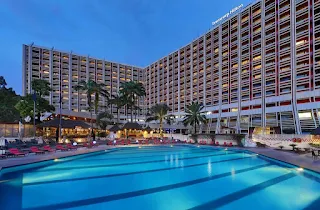
Residents of Abuja woke up to a troubling sign of declining basic services after guests at the upscale Transcorp Hilton Abuja were handed buckets of water alongside apology letters from management.

The notice, which began circulating widely on social media earlier in the week, revealed that the hotel had been unable to provide running water due to supply disruptions linked to the FCT Water Board. In response, staff resorted to distributing buckets to guests for bathing and other daily needs an unusual scene for a facility known for luxury and premium services.
Reports suggest the situation persisted for several days, with management advising guests to contact the duty manager for additional water supplies where necessary. The incident quickly drew widespread attention, largely because the Transcorp Hilton is considered one of Nigeria’s most prestigious hotels, frequented by top government officials, corporate executives, and international visitors.
Despite its reputation and high room rates, guests reportedly found themselves relying on manually fetched water an image that sharply contrasts with the hotel’s status and expectations.
Addressing the situation, Nyesom Wike attributed the disruption to a private developer, alleging that construction activities led to damage of a major water pipeline in the area. He explained that repair teams had already been deployed to restore supply.
“It is not our fault; it is the fault of a private developer, but we have no excuse not to restore it,” Wike said, while appealing for patience from affected residents.
The water shortage has impacted several districts across the capital, including Gwarinpa, Wuse, and Garki, leaving many households scrambling for alternatives such as boreholes and water vendors often at significantly higher costs. In some areas, residents claim the disruption has stretched on for weeks.
Compounding the problem are power challenges affecting key treatment facilities, particularly those connected to the Lower Usuma Dam, further straining the already fragile supply system.
Public reaction has been swift and intense. Images of plastic buckets placed inside one of the country’s most luxurious hotels have sparked outrage and disbelief online. Many questioned how such conditions could exist in the nation’s capital, especially in a location often seen as a symbol of Nigeria’s global image.
Others pointed out that the crisis cuts across social and economic lines, affecting both high-end establishments and ordinary households alike.
The hotel’s memo, reportedly issued in mid-April, cited emergency maintenance works in the Maitama area as the immediate cause of the disruption. While the message used standard corporate language to express regret, the visual contrast between luxury surroundings and basic water storage has left a lasting impression on the public.
Wike has indicated plans to personally inspect the damaged site and consider possible sanctions against those responsible for the incident. Meanwhile, repair efforts by the Water Board continue, although no definitive timeline has been provided for the full restoration of water supply across affected areas.
For many Abuja residents, the situation goes beyond inconvenience. It has disrupted daily routines, increased living costs, and placed additional strain on businesses that rely heavily on consistent water access.
The incident has reignited broader concerns about infrastructure reliability in the Federal Capital Territory an area many believe should reflect the highest standards in the country. As repairs continue, both residents and visitors remain uncertain about when normal service will be fully restored.